Home › Asphalt Pathways, Sidewalks, and Trails
Connect people and places with smooth asphalt pathway paving in Fort Wayne, IN. We build sidewalks, multi use trails, and campus walkways that are comfortable for walking, biking, and strollers. Our paths are designed for proper drainage and long term durability with minimal maintenance.
Precision Asphalt Fort Wayne provides professional asphalt pathway paving throughout Fort Wayne, IN, Indiana and the surrounding area. Our licensed, insured crew delivers safe, clean, on-time work with a free estimate before anything begins. Call (260) 408-6873 or request your free quote.
Asphalt Pathways, Sidewalks, and Trails in Fort Wayne
Asphalt is often chosen for pathways, sidewalks, and walking trails in Fort Wayne because it is smooth underfoot, cost effective compared to concrete, and relatively simple to maintain. Precision Asphalt Fort Wayne focuses specifically on designing and building asphalt paths that stand up to northeast Indiana’s freeze-thaw cycles and heavy foot and bike traffic.
When you contact us, we start by asking how the path will be used. A walkway from a driveway to a front door needs different thickness and drainage planning than a multi-use trail behind a subdivision or a golf cart path. We look at pedestrian vs light vehicle use, expected traffic volume, and whether the surface must be ADA accessible. This early planning stage drives the structure of the base, the thickness of the asphalt, and the long-term durability.
Our team is familiar with local site conditions in Fort Wayne, including clay-heavy soils, low spots that stay wet, and areas with tree roots close to the surface. We factor these into the layout and depth of the stone base so your path does not heave, settle, or crack after the first winter.
Planning and Design for Your Asphalt Pathway
Good pathway paving starts on paper. Precision Asphalt Fort Wayne begins with a site visit to measure grades, note drainage patterns, and discuss the exact route for the path, sidewalk, or trail. We mark utilities, identify potential obstacles such as large tree roots or existing landscaping, and determine where water will naturally want to flow.
If ADA accessibility is required, we design slopes and cross slopes to stay within code limits so walkers, wheelchairs, and strollers can use the path safely. For community trails and school campuses, we often recommend wider paths, typically 8 to 10 feet, to comfortably handle two-way traffic. Residential walkways may be 4 to 5 feet wide so two people can walk side by side.
We also help you decide on edge treatments. Options include neat sawcut edges into existing pavement, compacted topsoil and seed along the sides, or steel or concrete edging in areas where you want a sharp visual line. For longer trails, we can add gravel shoulders to improve drainage and give runners a softer surface beside the asphalt. All of these details are finalized before we bring equipment on site, which keeps the project efficient and predictable.
Site Preparation, Grading, and Base Construction
Once the design is set, we move into site preparation. For new asphalt pathways or trails, Precision Asphalt Fort Wayne clears vegetation, sod, and topsoil along the route and removes any unstable fill material. We then grade the subgrade to establish the correct slope, usually a minimum of 2 percent cross slope so water sheds off the path instead of pooling on it.
Because Fort Wayne soils often contain clay that holds water, we pay particular attention to compaction. The subgrade is compacted with a plate compactor or roller until it is firm and stable underfoot. In wetter areas or low spots, we may install underdrains or use a geotextile fabric between the soil and stone base to keep the base rock from pumping into the subgrade over time.
On top of the prepared subgrade, we install a compacted aggregate base, typically 4 to 8 inches thick depending on usage. For light residential pathways, 4 inches of compacted limestone base is usually adequate. For multi-use trails that may see carts or maintenance vehicles, we often recommend 6 inches or more. The base is compacted in lifts and checked with a straightedge to eliminate high and low spots before any asphalt is placed.
Asphalt Pathway Paving: Materials and Installation
With the base ready, we place the asphalt. Precision Asphalt Fort Wayne uses a fine-graded asphalt mix for pathways, sidewalks, and trails so the finished surface is smoother under shoes, bikes, and rollerblades. A typical section for a pedestrian path is 2 to 3 inches of compacted hot mix asphalt over the stone base, with thickness adjustments for heavier use.
For longer or wider trails, we usually pave with a small screed paver to achieve a consistent thickness and smooth finish. In tight residential backyards or around existing landscaping, hand placing and compacting the asphalt may be the better approach. We compact each lift with a roller, then finish edges with a plate compactor and hand tools so the sides are tight and well supported.
We time our paving work to local conditions. In Fort Wayne, the most reliable paving months are typically April through early November, when daytime temperatures stay high enough for proper compaction. Paving in colder weather can lead to weak bonds between layers and a rougher surface, so if a late-season project is necessary, we adjust the crew size and rolling sequence to get full compaction before the mat cools.
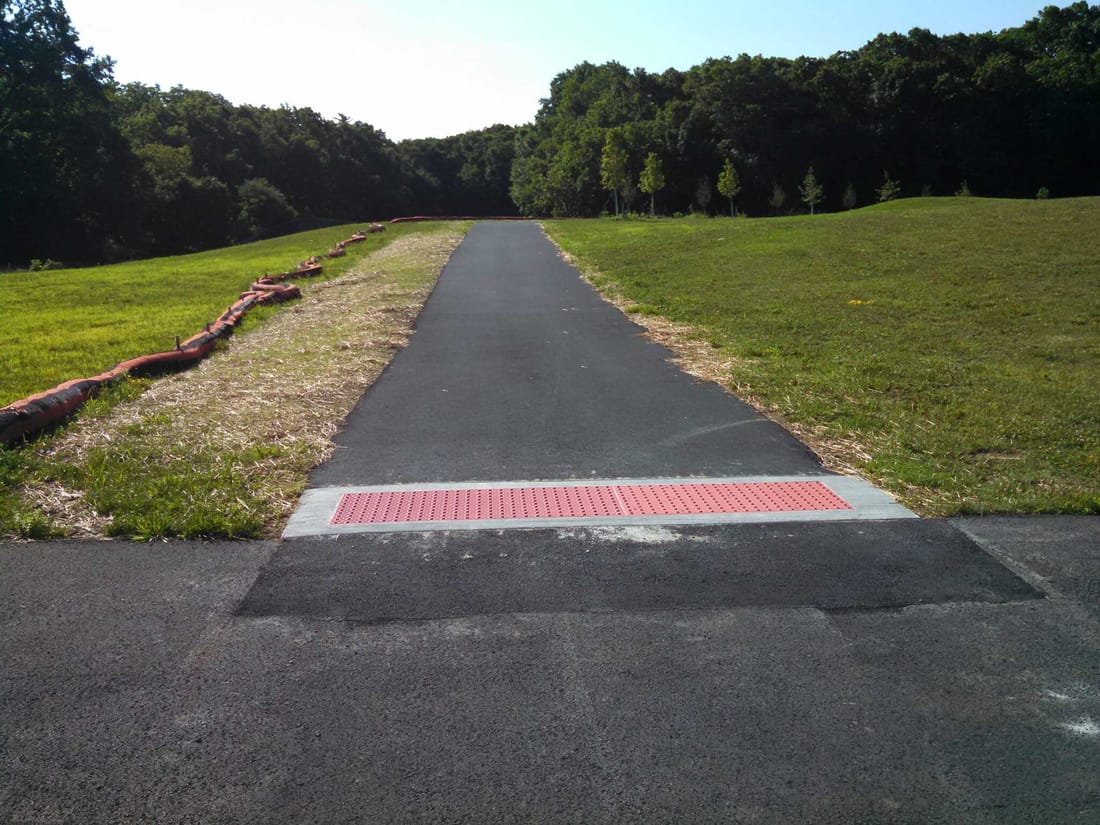
Once the asphalt is compacted and cooled, we handle tie-ins to existing driveways, roads, or patios so there is no abrupt step or trip hazard. If striping, directional arrows, or crosswalk markings are needed for a campus or park trail, we typically schedule that work after the asphalt has cured for a short period.
Local Considerations: Drainage, Weather, and Roots
Fort Wayne’s climate and tree-lined neighborhoods introduce specific challenges for asphalt pathways and trails. Freeze-thaw cycles create movement in the soil, which is why drainage is one of the first issues we address. Precision Asphalt Fort Wayne grades paths so water runs off quickly and adds swales or shallow ditches nearby if needed. Where water tends to collect, we may recommend French drains or catch basins to protect both the path and adjacent lawns.
Tree roots are another major factor. Cutting large roots can damage mature trees, but paving tightly against raised roots usually leads to cracked or buckled asphalt in a few years. We work with you to decide whether to reroute the path slightly, bridge over a root area with additional base and careful grading, or, where appropriate, have a tree professional selectively prune roots before construction.
Salt use in winter is also considered. While asphalt tolerates de-icing salts better than concrete, heavy salt can still shorten service life. For heavily used sidewalks or school trails, we often recommend regular snow removal and sand or treated salt products rather than repeated heavy applications of rock salt. Proper pitch and smoothness also make it easier to clear snow without gouging the surface.
Cost Factors, Lifespan, and Maintenance
Pathway and trail projects vary in price, and we explain the cost drivers clearly before work begins. The main factors are total length and width, required base depth, access for equipment, and site conditions such as heavy clearing or drainage improvements. A straightforward backyard walkway with easy access is less expensive per foot than a winding greenway through wooded ground that requires extensive preparation.
Precision Asphalt Fort Wayne also discusses mix type and thickness as part of cost planning. A thicker asphalt layer with a stronger base costs more up front but reduces the risk of rutting and settlement, which can be important for HOA walking loops or park trails that must stay safe and attractive for many years.
For maintenance, we outline a simple plan at the end of the project. Most asphalt pathways only need periodic crack sealing and, in some cases, sealcoating after the first year or two. Small edge cracks from lawn equipment or settlement are easy to seal early and far cheaper than letting water undermine the base. We recommend a visual inspection every spring after the thaw so any problems are caught quickly.
With proper construction and realistic use, most asphalt pathways and trails in our area provide 15 to 25 years of service before major rehabilitation is needed. When resurfacing time comes, we can mill off the top layer, repair localized base failures, and repave a new surface without rebuilding the entire path.
Why Choose Precision Asphalt Fort Wayne for Your Path or Trail
Working on narrow pathways and trails is different from paving driveways or parking lots. Equipment needs to fit tight spaces, transitions to lawns and landscaping must be neat, and pedestrian comfort matters as much as structural strength. Precision Asphalt Fort Wayne brings dedicated crews and right-sized equipment for this type of work so we can build pathways without tearing up the rest of your property.
We coordinate closely with homeowners, HOAs, schools, and park managers around Fort Wayne to limit disruption. For example, on school campuses we often phase work around summer schedules, and in neighborhoods we can stage materials and equipment to keep driveways open as much as possible. We also provide clear guidance on how long to stay off the new surface, usually 24 to 48 hours for foot traffic depending on weather.
From the first layout paint on the ground to the final compaction pass, our focus is on long-term performance, not just a quick black strip of asphalt. If you are considering a new asphalt pathway, sidewalk, or trail in Fort Wayne or nearby communities, we are ready to walk the route with you, explain your options in practical terms, and deliver a surface that looks clean and stays safe for years.