Home › Road, Street, and Municipal Paving
Partner with a dependable crew for road paving in Fort Wayne, IN. We pave subdivision streets, municipal roads, and private campuses with durable asphalt designed for traffic loads. Our team manages milling, paving, and traffic control so your project stays on schedule and within spec.
Precision Asphalt Fort Wayne provides professional road paving throughout Fort Wayne, IN, Indiana and the surrounding area. Our licensed, insured crew delivers safe, clean, on-time work with a free estimate before anything begins. Call (260) 408-6873 or request your free quote.
Road Paving for Fort Wayne Streets, Neighborhoods, and Municipal Projects
Road, street, and municipal paving in Fort Wayne is its own kind of work. Traffic loads, freeze-thaw cycles, and drainage around the Maumee, St. Marys, and St. Joseph rivers all affect how long new pavement lasts. At Precision Asphalt Fort Wayne, we focus on building road surfaces that hold up to city buses, trash trucks, and Midwest winters, not just a few car trips a day.
When you call us about a road paving project, we start with what the road actually does. Is it a quiet subdivision street, a busy collector road near Dupont or Coliseum, or an access road serving delivery trucks on the south side? That use determines asphalt thickness, base requirements, and the mix design we recommend. We walk the site, note traffic patterns, nearby drains, and problem spots like rutting or standing water, then build a plan that fits both your budget and the real conditions on the ground.
We work with cities, townships, HOAs, industrial parks, churches, and private property owners who maintain their own streets. Our approach is practical. We explain specific options for your road, what they cost, and how long they realistically last in Fort Wayne. You get straight answers on whether you need a full reconstruction, a structural overlay, or targeted patching plus resurfacing, so you are not paying for work you do not need.
How Road and Street Paving Actually Gets Done
Good road paving is more than just spreading blacktop. Precision Asphalt Fort Wayne follows a sequence that protects your investment and reduces callbacks.
First, we evaluate the base. Many of the problems we see in older Fort Wayne streets start underneath the asphalt. Soft subgrade, thin stone base, or failed utility trenches lead to potholes and alligator cracking. Where the base is weak, we mill out or excavate the failed areas, then rebuild with compacted aggregate to the depth the design calls for. On heavier use roads we often recommend geotextile fabric under the stone to stabilize wet or silty soils.
Next, we correct grades and drainage. In this climate, water that cannot leave the pavement surface will break it up within a few seasons. We set cross slopes so water runs to the gutter or ditch, adjust manhole and catch basin rims, and cut out low spots that collect water. On subdivision streets we pay close attention to driveway tie-ins so there are no abrupt bumps or trip edges.
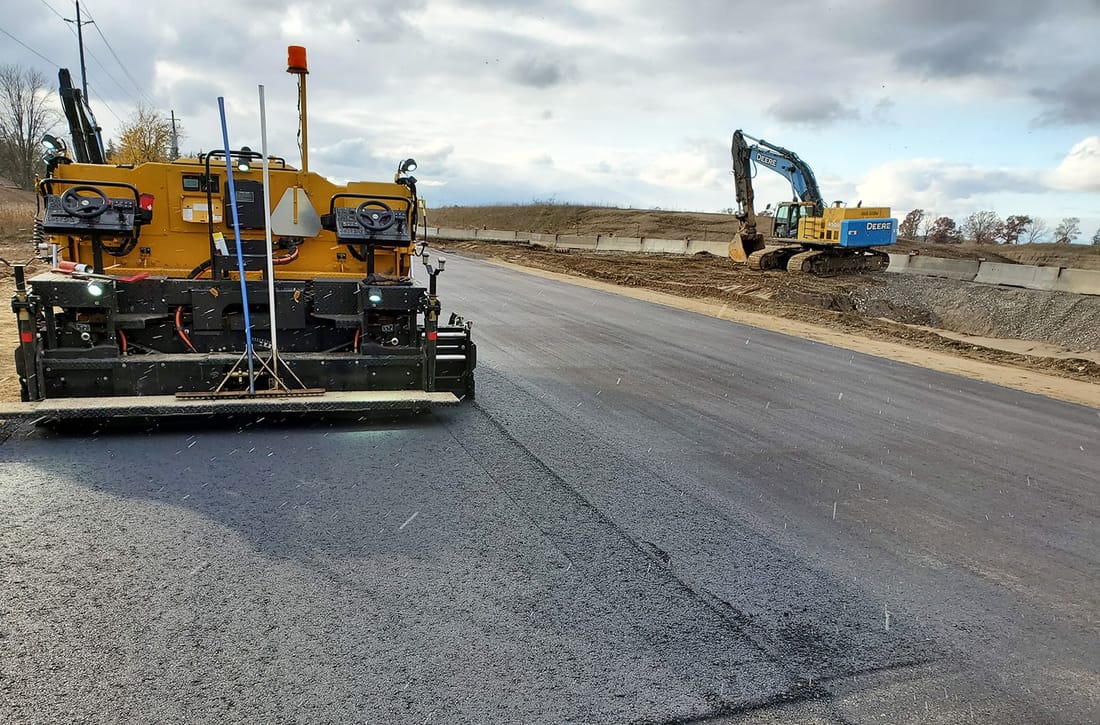
Then we install the asphalt in one or more lifts. Light local streets may get a single 2 to 2.5 inch surface course over a sound base. Higher traffic or bus routes often need a 2 to 3 inch binder course plus a 1.5 to 2 inch surface course. We use commercial pavers with automatic screed controls for a consistent mat, and compact with multiple rollers while the mix is within the right temperature range. Proper compaction is what gives the pavement its strength. For municipal or engineered projects, we can provide density reports and mix tickets on request.
Finally, we finish edges, transitions, and cleanup. Joints to existing pavement are milled and tacked so the new and old surfaces lock together instead of separating. Gravel road shoulders are pulled in and compacted against the new pavement edge where applicable. We coordinate striping and signage so the road can be safely reopened on schedule.
Material Choices, Mix Designs, and Local Conditions
Not all asphalt is the same, and what works in a warm coastal town will not last long in Fort Wayne. Precision Asphalt Fort Wayne works with local plants that produce Indiana Department of Transportation compliant mixes, and we choose the right product for the street you are paving.
For most residential streets and private drives, we use a surface course with a finer aggregate size. This gives a smoother ride and better appearance in subdivisions and business parks. On heavier use streets, truck routes, or loading areas, we may specify a coarser, more stone-rich surface or an additional binder course to resist rutting from slow, heavy traffic. We also account for salt and plow damage by selecting mixes that resist raveling and edge breakdown.
Temperature and season matter. Fort Wayne paving is usually best from late spring through early fall. If you try to pave a street when the ground is too cold or the air is windy and cool, the asphalt loses heat too fast, does not compact correctly, and you get a weaker surface. We schedule municipal paving around school calendars, peak traffic periods, and the paving weather window so you are not stuck with pavement that starts life at a disadvantage.
We also look at existing underground utilities and previous patches. Areas with a lot of water main or sewer repairs can benefit from a thicker overlay, reinforcement grid, or full-depth patching beneath the new surface. These choices cost more up front but reduce future patchwork and extend pavement life, which matters when you are managing a large street system with a fixed budget.
What Drives Cost and How to Plan a Paving Budget
Road paving costs in Fort Wayne are mainly driven by three things: thickness, base condition, and access. Precision Asphalt Fort Wayne explains these factors clearly so you can prioritize your budget.
Thickness is straightforward: more inches of asphalt per square yard means more material and more truckloads from the plant. A local residential street with light traffic might be designed at 3 to 4 inches total, while a busy internal road in an industrial park could be at 5 to 7 inches with multiple lifts. We can often design alternate sections that show you the cost difference between a minimum code-compliant option and a more robust section that reduces maintenance later.
Base condition is where many surprises show up. If the existing road has large areas of structural failure, we may recommend milling and full-depth replacement in those zones. This costs more than a straight overlay but avoids laying new asphalt over a weak foundation. To help you plan, we can walk the entire route, mark likely problem areas, and give line-item pricing for patching, milling, and full-depth repair so you can choose how much to tackle this season.
Access and staging also affect cost. Narrow streets with cars parked on both sides, limited turnarounds for trucks, or tight work windows near schools or hospitals can increase labor time. We help you build a phasing plan that groups work into logical sections, keeps emergency access open, and reduces the need for constant remobilization. For HOAs and private campuses, we provide clear maps and schedules you can share with residents or tenants so they know when their block will be affected.
If you are planning multi-year improvements across several roads or streets, we can help you prioritize which segments to address first, based on condition and traffic, so you do not waste money overlaying pavements that should really be rebuilt.
Traffic Control, Striping, and Long-Term Road Maintenance
Good road paving includes everything needed to keep people safe during and after the work. Precision Asphalt Fort Wayne handles traffic control using MUTCD-compliant signs, cones, and flaggers when needed. On busier streets, we may set up lane shifts or temporary closures outside peak hours. For neighborhood streets, we coordinate with board members or property managers to set clear closure times and emergency access plans.
Once the asphalt is placed and cooled, we arrange for pavement markings. For public or high-traffic areas, that typically means thermoplastic or durable traffic paint for centerlines, edge lines, crosswalks, stop bars, and arrows. In private developments we also stripe parking lanes, fire lanes, and ADA stalls if they connect directly to the paved road or drive lane. We can match existing layouts or adjust them to improve visibility and traffic flow.
Long-term performance depends on basic maintenance. For new municipal or private streets, we usually recommend a crack sealing program once the pavement has gone through at least one winter and minor shrinkage cracking has appeared. Sealing keeps water out of the base and slows down freeze-thaw damage. On lower volume streets, a sealcoat or fog seal at the right time can stretch the life of the surface by several years.
We also advise clients to monitor high-stress areas, like bus stops, sharp curves, or intersections that see a lot of turning trucks. Addressing localized rutting or shoving early with small patches is far cheaper than waiting until those spots spread and undermine a whole lane. For larger owners, like HOAs or industrial campuses, we can create a simple pavement inventory with condition notes and a maintenance schedule so you can see at a glance what needs attention each year and budget accordingly.